Showing posts with label Lupine Publishers. Show all posts

Friday, 29 November 2019

Enforcement of Regulatory Bodies to Trade Indian Medicinal Plants and DNA Bar-coding In Wildlife Forensics

Enforcement of Regulatory Bodies to Trade Indian Medicinal Plants and DNA Bar-coding In Wildlife Forensics


Abstract


India's diverse topology and habitat flourishes near about 45,000 species of plants. Certain species among these plants are medicinal plant species which are endemic to India. These plants are valuable for their medicinal or aromatic properties. Due to India's biodiversity abundance, plants from the wild are wildly exploited resulting in over exploitation of medicinal plants. The present review is carried out to ascertain the rules and their regulations in various states of India which are presently saving the national heritage and helping officials to apprehend herb smugglers. The review also presents the data suggesting the present scenario of advancements in the field of wild life forensic genetics to deal with such cases and technical advancements in the field of plant/part identification during the confiscations in various states.
Keywords: DNA bar-coding; Laws protecting plants; Indian Forest ACT; Wild Life Protection Act; CITES Appendix

Introduction


Wildlife forensics uses scientific tools to confiscate criminals dealing with restricted wildlife products. In recent times, very less literature could be found on crimes related to plants which are likewise smuggled for their socioeconomic importance. Many newspaper headlines mention such trade happenings around the world [1]. Various national and international regulatory bodies are also actively regulating such trade practices. But, due to lack of awareness and limited research work on these aspects of wildlife forensics, herbal medicine industry is growing. According to traffic.org India and china ranked 3rd and 2nd respectively to export plant material used in traditional healing systems. Plants with medicinal values are majorly collected from the wild [2]. To regulate herbal plants in trade, organizations like CITES (Convention on International Trade in Endangered Species of Wild Fauna and Flora) plays a major role by providing guidelines to the signatory bodies. CITES convention has provided three appendixes i.e. Appendix I deals with species which are threatened or near to extinction, Appendix II deals with the species which might become threatened in the coming future, Appendix III of cites deals with plant requested to be included under regulation by member signatory countries. CITES is dedicated to provide fortification to plants as well as animals worldwide [3]. CBD is a different biodiversity convention which utilizes Nagoya protocol that gives the ability to access genetic resources of the native country and also ensure fair and unbiased sharing of remuneration arising from their use of these assets between it signatory countries of the convention [4]. Laws protecting Non wood forest produce in India. According to Indian Forest Act, 1927, thirteen Chapters have been solely dedicated to the protection of wildlife flora. The law stated to facilitate the lawful and unlawful activities of forests, duties and powers to forest officers and penalties and punishments as per the state Government rules. The act defines itself by stating the following definition.
"Consolidate the law related to forest, the transit of forest produce and the duty livable on timber and other forest produce". The word "forest produce" include timber, charcoal, caoutchouc, catechu, wood-oil, resin, natural varnish, barck, ac, mahua flower, mahua seeds and myrabolams. The chapter 1 clause2 (4b) in the Indian forest act also gives the liberty to add the trees, leaves, flowers, fruits, grass, creepers reeds, moss and all parts of such plant produce and other parts or produce that are not directly mentioned in the act to be protected and preserved by same regulations prescribed by the act [5]. By describing the forest produce broadly, the Indian forest act take the responsibility to even protect the non-economical plants which are mentioned or not mentioned in the act [6]. Basically the non-wood forest produce is economically important produce of the forest other than wood, which is being exploited by the law breakers to earn the instant money [7]. NTFPs are the active ingredient of budding small scale and fully developed large scale industries to commercialize the products to earn profit [8]. The produce (medicinal herbs) is profitable forest produce which is often used by pharmaceutical industries to launch health related products in the market [9]. These companies or organizations have permits and licenses to collect the permitted plant varieties from the locals [10]. The local herb dwellers have certain powers given by state and center governments through Indian biodiversity act etc. to earn their living by using their traditional knowledge of gathering wild flora [11]. This lawful business turns illegal when these dwellers and industrial set up without prior permissions gather and motivate forest dweller to supply the produce in bulk [12]. With limited knowledge of endangered and threatened species restricted from wild collection or deliberate collection to earn instant money is the main reason of utilization of forest produces [13].
According to the chapter 2 of INDIAN FOREST ACT which defines the reserve forest area under section 28 clause (f) which states "Any person who fells, girdles, lops, taps or burns any tree or strip off the bark leaves from, or otherwise damages the same and clause (g) removes any forest produce shall be punishable with imprisonment for a term which may extend to six months or with fine or both in comparison to the damage [14]. Similar State Provision according to section 26. In this Bihar Sec. (26) the Forest range Offence is said to be cognizable and punishable with sentence for a maximum term of 6 months which may extend up to 24 years or with fine up to 5000/- or both + compensation[15]. In Gujarat Sec (26) of Indian Forest Act, punishment up to 1 year or with fine up to 1000/. In Himachal Pradesh according to Sec (26) punishment for forest offence is two years along with the fine of 5000. In Madhya Pradesh & West Bengal I year punishment is decided for the offender and fine of 2000 is imposed on such illegal activities. In Uttar Pradesh the maximum imprisonment for violating the rules of Indian forest act maximum punishment of 2 years or a fine of Rs. 5000/- or both is imposed on the offender when proved guilty for violation of sect. (26) (b), (h) (i) (j) but if the equivalent crime is committed second time and subsequently, sentence up to 2years or fine up to Rs. 20,000 but not less than Rs. 5000/- or both are imposed [16]. For the abuse other clauses of Sec. (26) imprisonment up to six month or a fine up to Rs. 1000/- or both is provided and for second and subsequent violation of these subsections is punishable by imprisonment up to six month or a fine up to Rs. 2000/- or both. Similarly, in chapter 3 which defines the protected forest areas under section 33 clauses is punishable with same penalty as is defined for the activities in reserve forest declared by the officials [17].

State Provisions According to Section 33

In Bihar state according to the section (33) imprisonment minimum of six months, maximum 2 of years fine minimum Rs. 1000/- maximum Rs. 5000/- imprisonment + fine both is availed to punish the convicted criminal but in case of Haryana:-15Sec (33) Imprisonment up to 1 year or with fine up to Rs. 1000 is imposed for the conviction in similar crime [18]. In Madhya Pradesh punishment lesser than Bihar Punishment is decided upto1 year or with fine up to Rs. 1000/ [19]. In Maharashtra punishment for violating Indian forest act rules is only up to 1 year or with fine up to Rs. 2000. Similarly in West Bengal Sec. (33) up to 1 year or with fine up to Rs. 1000 only. Uttar Pradesh is strict in terms of punishment for forest offences as their Maximum imprisonment of two years or fine up to Rs. 5000/- or both and for second and subsequent violation maximum term of 2 years or fine up to Rs. 10,000/-[20]. Wildlife protection Act. 1972 and the listed species Wildlife protection Act. 1972, SCHEDULE VI six plants are protected strictly by this Act which offers severe penalties to the offenders [20].The penalty is minimum 3 years which may extend depending upon the severity of the illegal activity and with fine of rupees 25000. If the convict is license holder the license will be cancelled and upon repetitive offence the penalty may increase up to 7 years [21]. Chapter ii of WPA outlines the protection of definite plants by declaring two clauses which are as follows:
    a) Willfully pick, uproot, damage, destroy, acquire or collect any specified plant from any forest land and any area specified, by notification, by the Central Government.
    b) Posses, sell, offer for sale, or transfer by way of gift or otherwise, or transport any specified.
Plant, whether alive or dead, or part or derivative thereof: Provided that nothing in this section shall prevent a member of a scheduled tribe, subject to the Provisions of Chapter IV, from picking, collecting or possessing in the district he resides any Specified plant or part or derivative thereof for his bona fide personal use." Further in section 17B of chapter 2 the law provides relaxation to educational institutions, researchers, scientific institutions to collect plant samples by acquiring the permission from chief wildlife warden [22]. The plants mentioned in this section are also prohibited to be cultivated without the prior permission from chief wildlife warden. The license is necessary to commercially cultivate the plants and sell them to the wholesalers. These rules are followed more strictly in protected and preserved forest areas or any such areas which are being declared protected by the government officials [23].
First species listed is Beddomescycad (Cycas beddomei) is native to trimulla hills of Andhra Pradesh. The male cones incorporate bioflavonoid which is used in the management of rheumatoid arthritis and muscle pains. It is listed in cites Appendix1 and Wild Life Protection Act 1972 Schedule 6 and CITES appendixes [24]. Blue Vanda (Vanda soerulec) is another endangered native plant of India which is found at 2000m- 3000m altitude. The plant is traded for its ornamental properties [25]. Kuth (Saussurea lappa) is list in WPA is also listed in CITES appendix 1. It is found at 2500 to 3000m Himalayas, Jammu Kashmir forest areas, Western Ghats, and kishenganga valley. It is traded by the name kuth kauri, kuth mithi. Basically the root of the plant contains Sesquiterpene lactones which are used to treat serious ailments like asthma, inflammatory diseases, and ulcer and stomach problems [26]. In India, only two genera namely Cypripedium and Paphiopedilum listed in Cites 1 and WPA schedule 6 can be found in Himalayan and NorthEast Indian region except one species of Paphiopedilum which is endemic to Western Ghats. This orchid specie is specifically traded for its ornamental and aromatic properties [27]. Pitcher plant's natural habitat is India and mostly originates in Jarain area of the Jaintia Hills, the Baghmara area of the Garo Hills of Meghalaya or in Assam.
The plant is exploited from the wild for its ornamental and medicinal use. It is enumerated in cites Appendix1 and Wild Life Protection Act 1972 Schedule 6 [28]. Red Vanda is listed CITES appendix 1 and schedule 6 of WPA is found in Meghalaya. It is being traded internationally for its ornamental properties [29]. Customs Act. 1962, regulates the import and export of India. Under this act, section 112 defines the penalties for improper import and export of any good which is restricted by any law in action at that present time will be confiscated and fine of rupees 5000 or value of goods whichever is higher will be imposed. According to the section 118 and 119 deals with smuggling goods and goods used to conceal the smuggling goods. The section give the power to custom officers to seal any import and export goods and goods which are used to conceal the smuggled goods which are brought out of the limits of custom area and custom ports[30,31].
International treaties to protect plants
    a) International Treaty on Plant Genetic Resources for Food and Agriculture (IT PGRFA)
    Secretary-General of the United Nations [32].
    b) The International Tropical Timber Agreement (ITTA, 1983), International Tropical Timber Agreement, 1994 (ITTA, 1994 or ITTA2) [33].
    c) Convention on International Trade in Endangered Species of Wild Fauna and Flora, also known as the Washington Convention) [34].
    d) Convention on the Conservation of European Wildlife and Natural Habitats, also known as the Bern Convention (or Berne Convention), council of Europe [35].
    e) Convention on Biological Diversity (CBD) Secretary- General of the United Nations [36].
    f) Conservation of Antarctic Fauna and Flora Secretary- General of the United Nations [37].

Trade of restricted medicinal herbs

Wildlife trafficking have emerged with its medium from physical markets to online e commerce sites. Numbers of species are being sold on the web portals with dedicated websites, WebPages through face book, Instagram YouTube and many more social networking sites illegally just because these platforms provide greater anonymity to the seller. The plants which are being sold on these platforms are basically threatened rare or endangered [38]. EVAN MATI 307 medicinal products corresponding to ca. 283 species. Ten species out of 35 were found to be locally endangered and listed in IUCN [39]. The plants are also advertised online on daily bases and delivered without being securitized by the authorities. This may be due to lack of awareness on this issue specifically in India. Figure number 1-4 clearly shows such online business [40].

DNA Bar-Coding to Identify Plants in Trade

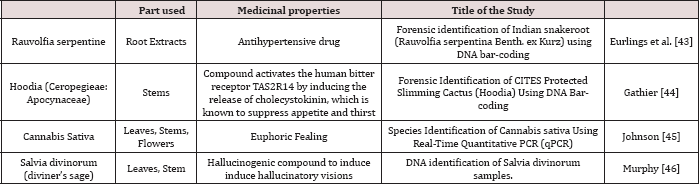
DNA bar-coding is presently quick and precise tool to identify plant species. Chloroplast genome off plant sequencing can convey a consistent barcode to accurately identify plants. The development of specific barcodes provides a new approach to distinguish closely related Species to tackle illegal trade of medicinal plants in trade [41]. Table 1 shows the ingenuities of Investigation work in wildlife forensics with respect to flora. The scanty research work in this area provide ample scope to scientist and researcher to explore this budding field of wild life forensics and establish barcode libraries specific to plant families or location specific libraries showing mutations if any [42-46].
Table 1: Shows the research work in the field of wildlife forensic
Conclusion


Due to India's biodiversity abundance, plants from the wild are wildly exploited resulting in depletion of important medicinal herbs. The illegal trade practices often go unnoticed because lack of awareness and lesser punishments as compared to the reimbursements involved to such trades practices. The punishments mentioned as such in the paper are demonstrating the lack of momentousness of law enforcement toward this serious issue. The Scanty literature on DNA Bar-coding provide ample opportunities of research in this untouched area of wildlife genetics which will directly benefit the law enforcement agencies to convict forest offenders

Read More Lupine Publishers Forensic And Genetics Journal Articles https://forensic-journal-lupine-publishers.blogspot.com

Read More Lupine Publishers blogger Articleshttps://lupinepublishers.blogspot.com


Friday, 15 November 2019

Ethanol Neogenesis in Stored Blood

Lupine Publishers| Journal of Forensic and Genetics


Abstract

During the investigation of accidental cases, blood samples obtained from accidental victim are submitted to forensic science laboratory for toxicological analysis. All through, ethanol analysis is performed on almost all cases of blood samples. The main problem is determining alcohol concentration in these cases is changes in Blood Alcohol Concentration (BAC) that can occur due to neo formation of ethanol. Blood samples stored under in sufficient conditions or for longer times and body fluids have undergone petrifaction often contains certain amount of volatile compounds. In the light of possibility that, neo formation of ethanol in improperly stored blood might give rise to an incorrect estimation of BAC. With this in mind, to study the effect of preservative and temperature on the formation and concentration of ethanol in blood samples, we estimated the ethanol neo genesis in stored and normal blood in different time period (0, 7, 14, 21, 28, 35 and 42 days). Head Space-Gas Chromatography instrument used to measure the level of ethanol in blood sample. We found that neo formation of ethanol was observed in normal blood sample. There was no any neo formation observed in blood sample with preservative and blood stored at 4 °C. Our study is supporting the studies which suggest that storage condition will affect the neo formation of ethanol in blood samples.
Keywords: Blood Alcohol Concentration; Neo formation; Head Space-Gas Chromatography; Ethanol.

Introduction

Determination of alcohol concentration is of great importance in medico legal autopsy blood samples, regardless of whether civil, criminal, or insurance law is involved. Blood alcohol cases in living individuals is often performed in forensic practice (e.g. after traffic accidents). Medico legal problems are not confined to determining alcohol as either a sole or joint cause of death, such as in accidents, but also include the problem of distinguishing true alcoholic poisoning. It is known that alcohol can be produced in blood after sampling. The amount of generated ethanol depends on the species of microorganisms present, the available substrates, the temperature and time of storage and the presence of preservatives added to the specimens. Neogenesis means regeneration of biological tissue or the formation of new products. Transformation and degradation of the well-known body structures (e.g. enzymatic digestion of cell components and membranes), together with accumulation of bacterial metabolites are likely to generate a huge range of new chemical compounds. Blood samples stored under insufficient conditions or for longer times and body fluids have undergone petrifaction often contains certain amounts of volatile compounds. A number of ubiquitous microorganisms are capable of forming or degrading alcohol, and neo genesis of ethanol is only a byproduct of bacterial decomposition processes [1-3].
The reactions that take place are mainly influenced by temperature, pH value, concentrations of available carbohydrates, and the presence of other utilizable nutrients.
Pathway of Metabolism:
Fructose -1, 6 - bisphosphateglyceraldehyde - 3 - phosphate ⇒ 3 - phosphoglycerate ⇒ 2 - phosphorglycerate ^ phosphoenolpyruvate ⇒ pyruvateacetaldehyde Acetaldehyde + glyceraldehyde - 3 - phosphate + H2O ⇒ 3 - phosphoglycerate + ethanol.
Putrefaction or decomposition is the final stage produced mainly by the action of bacterial enzymes mostly anaerobic organisms. These destructive bacterial agents cause marked haemolysis, liquefaction of clots and fresh thrombi and emboli, disintegration of tissues and gas formation in blood. Bacteria produces a large variety of enzymes and these breakdown the various tissues of the body. There is a progressive alteration of proteins, carbohydrates and fats. Putrefaction begins mainly by reductive processes due to the action of endogenous and exogenous bacteria and their enzymes and decay, based on oxidative reactions. Body tissues remain bacteriological sterile from exogenous infection for at least 20 hours after death. Whereas advanced putrefaction of a blood sample can be recognized macroscopically and by its odour, the transitional phase into putrefaction presents difficulties. As the blood decomposes its coloring matter transducer into the tissues which become uniformly red. The colour becomes darker and finally turns black. The most abundant volatiles detected during the forensic ethanol analysis are ethanol, acetaldehyde, 1-propanol, 2-propanol and acetone. These volatiles could either be initiated in the human body after the consumption of alcoholic beverages; or have been produced later during metabolic processes or by microbes [4-7].
Alcohol concentration often changes in putrefying blood. These changes might be caused by either a change in the level of ethanol or to the formation of higher alcohols, aldehydes, and ketones. Even though "fresh" samples of blood can contain a variety of higher alcohols. Therefore, the presence of such alcohols must be a result of neo genesis within the corpse or the stored blood sample. Anticoagulants and preservatives for blood: Anticoagulant is a substance that prevents blood from clotting by suppressing the synthesis or function of various clotting factors. The first anticoagulant preservative was introduced by Rous and Turner in 1916. It consisted of a citrate-glucose solution in which blood from rabbits was stored for two weeks, which prevented anaemia when transfused in another rabbit who had suffered from blood loss. Some of the commonly used anticoagulants are:
a) EDTA: Ethylenediaminetetra acetic acid as disodium or potassium salts is used. This is a chelating agent which binds the calcium which is needed for coagulation. It is effective at a final concentration of 1 to 2 mg / ml of blood. More than 2 mg / ml causes shrinkage of the cells. This is the best anticoagulant for peripheral blood smear and studies. Drawbacks: It inhibits the activities of enzymes like alkaline phosphatase, creatine kinase, and leucine aminopeptidase. EDTA is not suitable for calcium and iron estimation.
b) Heparin: It is mucoitin polysulfuric acid available as sodium potassium, lithium and ammonium salts. Heparin accelerate the action of antithrombin III which neutralizes thrombin thus prevents the formation of fibrin from fibrinogen. Heparin is added 0.2 mg/ml of blood. Drawback: It inhibits the acid phosphates activity. It interferes with binding of calcium to EDTA.
c) Oxalate: This form insoluble complex with calcium ions. Potassium oxalate at concentration of 1 to 2 mg/ml of blood is used. Combination of ammonium/potassium oxalate does not lead to shrinkage of the RBCs. Drawbacks: If the concentration is 3 mg/ ml, then there are chances for hemolysis. Oxalates inhibit several enzymes like acid phosphates', alkaline phosphates, amylase, LDH, and may cause the precipitation of calcium as oxalate salt.
d) Sodium Fluoride: This is a weak anticoagulant but used antiglycolytic agent to preserve the glucose. This inhibits the system involved in glycolysis and preserves the glucose. This is effective at a concentration of 2 mg/ml of blood along with other anticoagulant like oxalate.

Drawback: This is also inhibitor of many enzymes and also effect urease for the estimation of urea

a. Effect of temperature and preservative on blood
When blood is stored at 2-6 °C, glycosis is reduced but does not stop. Preservative solutions provide buffering capability to minimize pH changes and optimize the storage period. The lower temperature keeps the rate of glycolysis at lower limit and minimizes the proliferation of bacteria that might have entered the blood unit during venipuncture or from atmosphere. The rate of diffusion of electrolytes (Na+ and K+) across the cell membrane is also less at lower temperature.
b. Additive Solutions
One major benefit of the additive system is increase in the level of ATP, and red cells viability is enhanced, extending the shelf-life of the red cells to 42 days.
c. Health Care
Heavy drinking is a cause of ill-health and premature death. A person's blood alcohol concentration and state of inebriation at the time of death is not always easy to establish owing to various postmortem artifacts. The possibility of alcohol being produced in the body after death, e.g. via microbial contamination and fermentation is a recurring issue in routine casework. If ethanol remains unabsorbed in the stomach at the time of death, this raises the possibility of continued local diffusion into surrounding tissues and central blood after death. Blood samples, stored under insufficient conditions or for longer times and body fluids of corpses which had undergone putrefaction often contains certain amount of volatile compounds. This putrefactive alcohol is partly identifiably with congeners of alcoholic beverages. Such it is of Forensic relevance to discover post sampling ethanol neoformation and to discriminate putrefactive alcohols from fusel alcohols. Hence it cause on effect on person's health as it is stored blood but studies have revealed that few factors can change the results, such as amount of alcohol etc., so it is critical to decide the actual amount and this may also challenged by the legal system whether the person was under the influence of alcohol or not.

Aims and Objectives

    a) To determine the volatile compounds in blood samples.
    b) To study the effect of preservative and temperature on the formation and concentration of volatile compounds in blood samples.
    c) To study the effect of storage time (duration of storage) on blood samples under controlled conditions.

Materials and Method

Blood sample of healthy individual was collected from blood bank Sh. Narayan Hospital Rewari, Haryana).
Three flasks were taken having human blood (60ml) in each flask. Chemical used:
    a) Sodium fluoride (as preservative), this inhibit the system involved in glycolysis and preserve the glucose
    b) N-propanol (for internal standard) standards are used by which can be relate the concentration of the standard to concentration of the peak of the ethanol. Samples were analyzed using instruments Head space-Gas Chromatography
    Blood samples were divided into three conical flasks.
    a) With 500mg sodium fluoride (preservative) at room temperature
    b) Without preservative at room temperature
    c) Without preservative at cold temperature.
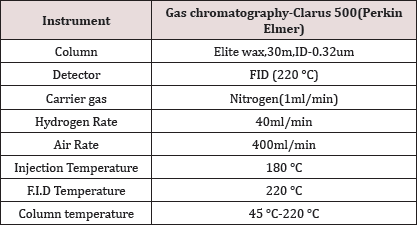
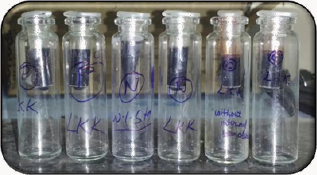
All three flasks were kept at their respective sites up to completion of the study from 16 February 2016 to 31 March 2016. Two vials of 1 ml each were prepared from each conical flask. Three vials with internal standard (90ul/1ml of blood sample) and three without internal standard. Blood was prepared for HS-GC. Three vials were subjected for qualitative study and another three for the quantitative analysis. After instrumentation graph was prepared and studied (Figure 1) (Table 1).
Table 1: Showing parameters of Gas Chromatography.

Figure 1: Showing preparation of samples..
Lupinepublishers-openaccess-Forensic-Genetics

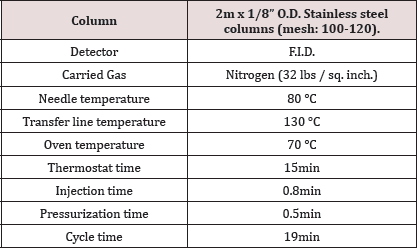
Headspace GC is used for the analysis of volatile and semi- volatile organics in solid, liquid and gas samples. The headspace method is especially suitable for the very fast separation of volatile components (alcohols, acetone, aldehydes) in complex biological matrices especially blood in mass-liquor and prohibition law related cases. This method has the advantage of avoiding the risk of contamination of non-volatile components, which may be eliminated due to on-line analysis by gas chromatography. The principle underlying the headspace analysis is that in a sealed vial at constant temperature, equilibrium is established between the volatile components of a liquid sample and the gas phase above it (the head space). After allowing the time for equilibrium a portion of the headspace may be withdrawn one by one from vials using a gas-tight syringe and injected to GC for on-line analysis (Table 2).
Table 2: Showing parameters of Head space.

Results and Discussion

Boold samples stored under insufficient conditions or for longer times have undergone putrefaction often contains certain amounts of volatile compounds. The increase of ethanol and higher alcohols in putrefying blood is often recognized, for which first and foremost bacteria's are reasonable. Therefore, ethanol is only a byproduct of bacterial decomposition processes. The reactions that take place are mainly
influenced by temperature, pH value, concentrations of available carbohydrates, and the presence of other utilizable nutrients.
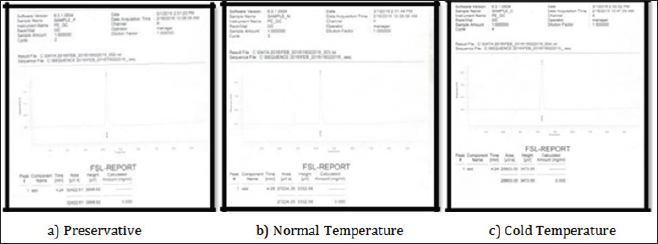
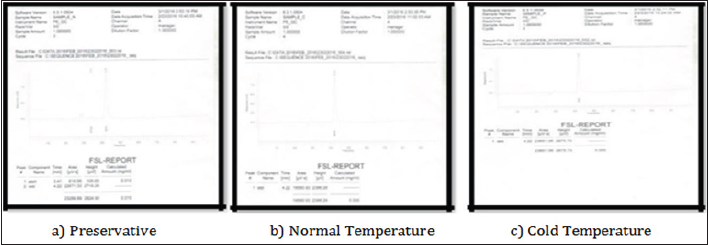
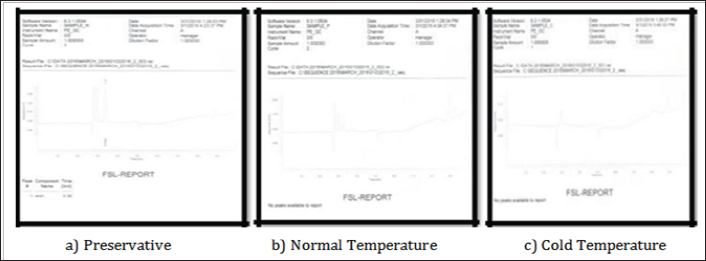
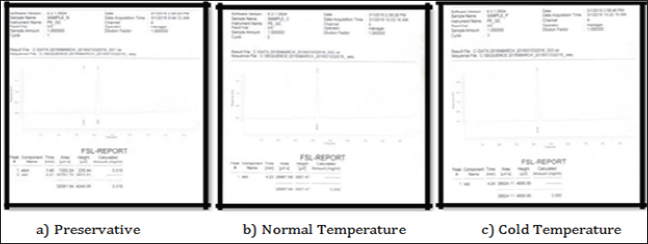
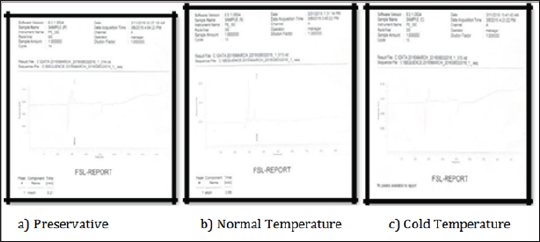
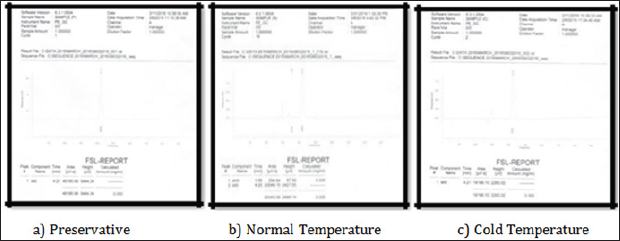
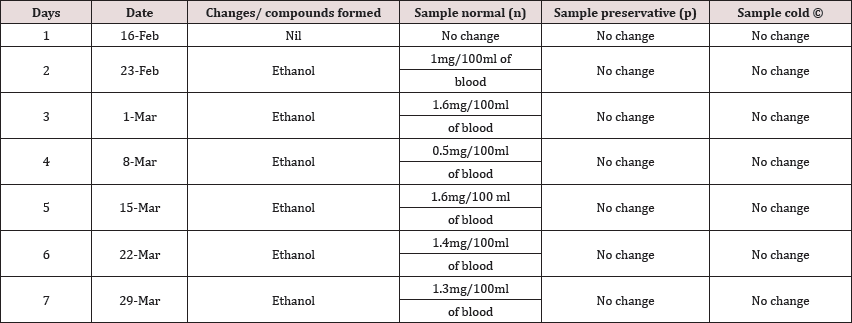
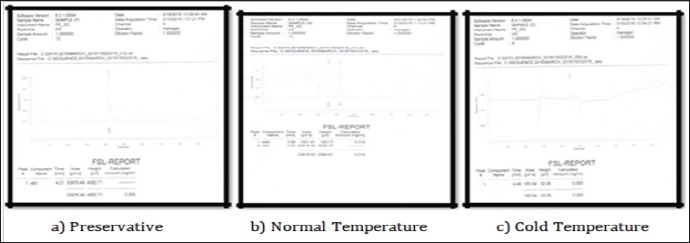
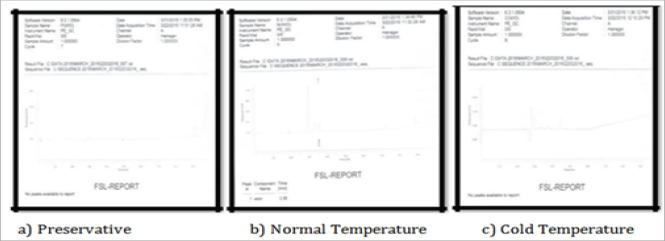
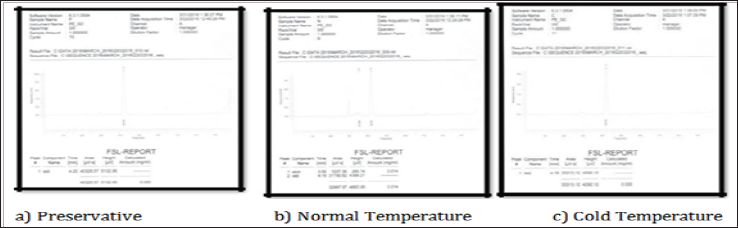
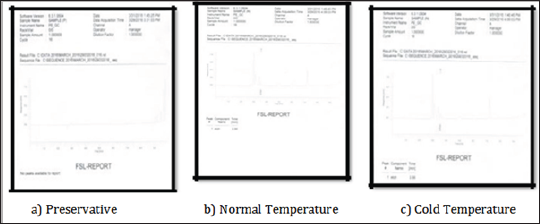
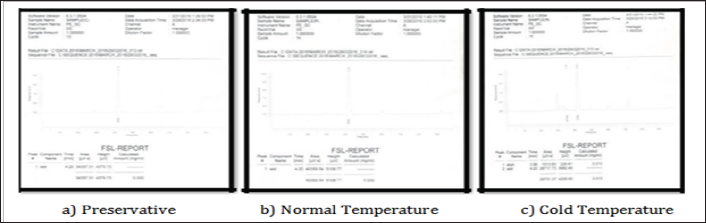
The main problems in the assessment of ethanol concentrations in blood from corpses include the potential of water loss, autolysis, putrefaction and postmortem glycogenolysis. A more precise differentiation of putrefactive alcohols has only been made possible by the introduction and development of gas chromatography. Comparing blood samples will recognize that the qualitative and quantitative; concentration of alcohols can be quite different. The possibility that neo genesis of ethanol after death might give rise to an incorrect estimation of BAC. In this study we examined the alcohol concentration qualitatively and quantitatively using head space-gas chromatography at the interval of successive seventh day from 16 Feb 2016 to 31 March 2016. The chromatogram of three different samples at different time periods is shown in following figures. Putrefaction of a blood sample was recognized by its odour and color. The predominating compound of alcohol formation in anaerobic putrefaction is ethanol. Additional formation of methanol, acetone and other alcohols occur only in trace amounts. But this study was only focused on the formation of Ethanol. The degradation of all alcohols however is assumed to commence within a few days. Peak values were measured after one week. It was found that the concentration of ethyl alcohol varies. After few weeks ethanol level decreases with increase in time of putrefactive blood and became almost constant. However no alcohol was detected at 4 °C. However, comparison of these graphs demonstrates that alcohol concentration often changes in putrefying blood. (Table 3) (Figure 2-12).
Figure 2: Showing quantitative chromatogram for the concentration of alcohol at day 1 in different samples.Day 1(16 Feb 2016)
Lupinepublishers-openaccess-Forensic-Genetics

Figure 3: Showing quantitative chromatogram for the concentration of alcohol at day 2 in different samples.Day 2(23 Feb 2016)
Lupinepublishers-openaccess-Forensic-Genetics

Figure 4: Showing qualitative chromatogram for the concentration of alcohol at day 3 in different samples.Day 3(1 March 2016)
Lupinepublishers-openaccess-Forensic-Genetics

Figure 5: Showing quantitative chromatogram for the concentration of alcohol at day 3 in different samples.
Lupinepublishers-openaccess-Forensic-Genetics

Figure 6: Showing qualitative chromatogram for the concentration of alcohol at day 4 in different samples.Day 4(8 March 2016)
Lupinepublishers-openaccess-Forensic-Genetics

Figure 7: Showing quantitative chromatogram for the concentration of alcohol at day 4 in different samples.Day 5(15 March 2016)
Lupinepublishers-openaccess-Forensic-Genetics
Table 3: Showing concentration of alcohol in different samples during different time periods.
Figure 8: Showing quantitative chromatogram for the concentration of alcohol at day 4 in different samples.Day 5(15 March 2016)
Lupinepublishers-openaccess-Forensic-Genetics

Figure 9: Showing qualitative chromatogram for the concentration of alcohol at day 6 in different samples.Day 6(22 March 2016)
Lupinepublishers-openaccess-Forensic-Genetics

Figure 10: Showing quantitative chromatogram for the concentration of alcohol at day 6 in different sampl
Lupinepublishers-openaccess-Forensic-Genetics

Figure 11: Showing qualitative chromatogram for the concentration of alcohol at day 7 in different samples.DAY 7 (29 MARCH 2016)
Lupinepublishers-openaccess-Forensic-Genetics

Figure 12: Showing quantitative chromatogram for the concentration of alcohol at day 7 in different samples.
Lupinepublishers-openaccess-Forensic-Genetics

Conclusion

The interpretation of postmortem alcohol levels is still problematic in forensic setting and in the field of legal medicine. Neo-formation of ethanol is due to microbial action either post-mortem in the body or from improper storage or preservation of the biological samples is a common problem in forensic toxicology. The same uncertainty applies to alcohol levels in blood samples that are improperly stored or are contaminated. In this project report neo formation of ethanol has been checked by using different temperature conditions and preservative. The alcohol concentration qualitatively and quantitatively using head space- gas chromatography at the interval of successive seventh day from 16 Feb 2016 to 31 March 2016. The chromatograms of three different samples at different time periods are shown in figures given above. At normal room temperature i.e. 20-28 °C without any preservative the decomposition of the blood starts and leads to formation of Ethyl alcohol. The concentration of ethyl alcohol varies as the days increases. It was found that the concentration of ethyl alcohol have varied pattern followed by a slight concentration decrease after 4th day. Thereafter, ethanol concentration remains more or less constant. However no alcohol was detected at 4 °C (Cold Temperature) and in the preserved blood. There is no real possibility for detail knowledge of post mortal changes of blood alcohol concentration in near future, so that it is necessary to comment alcohol aemia with special aspects on empirical practice.

Acknowledgement

I express my sincere and profound gratitude and deep regards to Prof Dr. RK Sharma, Chairperson, Department of Zoology Kurukshetra University Kurukshtra for allowing me to carry out the present study. I am highly obliged to Dr. RK Sarin, Director Forensic Science Laboratory, New Delhi-Rohini) for giving me the opportunity to undergo training course at their estimated institute. However, it would not have been possible without the kind support and help of many individuals and organizations. I would like to extend my sincere thanks to all of them. I am highly indebted to Mr. Loveleen Kumar Katyal for their guidance, ideas and constant supervision as well as for providing necessary information regarding the project and also for their support in completing the project. I would like to express my gratitude towards Dr. Jogender Tanwar (maternal uncle) and all member of Forensic Science Laboratory, New Delhi (Rohini) for their kind co-operation and encouragement which help me in completion of this project. My thanks and appreciations also go to my colleague my friend Ritu Malik in developing the project and people who have willingly helped me out with their abilities

For more Lupine Publishers please visit our website

For more Forensic and Genetic Sciences journals please click here

To know more about open access publishers please click on Lupine Publishers
Follow on Linkedin : https://www.linkedin.com/company/lupinepublishers
Follow on Twitter   :  https://twitter.com/lupine_online

Friday, 13 September 2019

Lupine Publishers| Journal of Forensic & Genetic Sciences

Abstract

In the common sense view, time is the cause of aging. But common sense knows nothing about either one or the other; to the extent that common sense confuses age, aging and old age, breaking all the rules of terminological precision.

Introduction

The concept of Aging

First of all, let's see why aging is a consequence rather than a cause., through three examples:
    a) The gradual staining of teeth does not result from aging; instead of that, it's a prodrome of aging.
    b) Wrinkles are not the result of aging; they appear when cells have exhausted their ability of scissiparity. We can say that wrinkles are one of causes of aging among others (inter alia)
    « Wrinkles (observed reality) « ⇒ aging (concept) »
    c) Osteoarthritis is not the result of aging; it results rather from antecedent factors. In fact, aging is a consequence of osteoarthritis:
    « Osteoarthritis (observed reality » ⇒ « aging (concept) »
    Wrinkles and osteoarthritis are syndromes of aging
    Medicine draws a distinction between chronological age, which is expressed with time units, and biological age, which depends on the physical health of an individual, and which is expressed in units of estimated time. For non living things, such as artifacts, we have introduced the expression "technical age".

The Chronological Age

Age, that is chronological age, is a concept of time. It is roughly evaluable, but not observable: no medical expert can accurately guess the exact age of an individual. Strictly speaking, age is a concept corresponding to "what separates birth from today": the relevant information, expressed as a number of years, months, and days, is very poor. Age of all things, alive or not, increases at the same rate. A person who has been around for a great many years is considered aged, something that does not inform in any way as to his or her physical or mental health. The verb "to age" has a double meaning: to become aged (age increase) and to become old (deterioration of physical condition). Early in 2014, a Frenchman almost 103 years old beat his personal cycling record by travelling 26 km in one hour: this was the feat of a man who was "advanced in years" - Cicero would say "grandis natu" Gaffiot [1]- but not old.

The Biological Age

Aging, that is the increase in biological age, is a gradual and unavoidable degradation of the physical condition; biological age concerns the physical condition at a given point in the process of aging. This is a reality which is observable, but which is difficult to evaluate. Indeed, there are countless criteria for assessing aging and old age, and the selection of one of them is necessarily arbitrary and incomplete anyway: the information contained by reality is extremely rich.
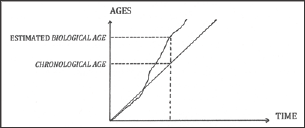
Figure 1: Comparing the estimated biological age and the
Lupinepublishers-openaccess-Forensic-Genetics
The Figure 1 is an imaginary example: the chronological age curve of an individual is a straight line, while the estimated biological age curve is erratic. On a given date, when the biological age exceeds the chronological age, an individual looks older than the average (Figure 1).

The Technical Age

The "technical age" takes into account the material aging, the wear, the maintenance, as well as the planned obsolescence or not. « Artifact: from Latin « artis factum », made from art. ».

The Aging of Bacteria

Bacteria are prokaryotic unicellular organisms whose genome consists of DNA with one chromosome. The statistical modeling of their development can help.com to understand aging. Bacteria reproduce by splitting through scissiparity one mother turns into two daughters, « ... which in their turn become mothers, each giving two. » daughters, etc. The population doubles with each generation; the exponential increase leads to a mathematical modeling such as:
1 → 2 → 4 → 8 → 16 → 32 → 64 → 128 ... 2 Exp (n)
    We start with one bacterium: 1 is written: 2 Exp(0)
    The first generation gives 2 bacteria, written: 2 Exp (1)
    The second generation gives 4 bacteria, written: 2 Exp(2)
    At the nth generation we have N = 2 Exp (n) bacteria
In a homogeneous medium, the generations reproduce at approximately the same rate "μ" (Greek letterμ); therefore, the number "n" of generations is approximately:
n & μ t
where "t" is the time indicated by the laboratory chronometer after "n” duplications. The number of bacteria finally reads:
    N # 2Exp (μ t) (1)
    The proliferation rate "μ” has three causes:
    a) Endogenous factors, specific to the bacterium. They depend on its heredity that is its genotype. One factor is the virulence, defined as the ability to multiply: Escherichia coli are able to divide every 20 minutes. Mbovis (Mycobacterium bovis) has a slower generation rate, but it is just as pathogenic. Benet [2].
    b) Exogenous factors, specific to the environmental surrounding: hygrometry, light, temperature, presence of sugar or nitrogen, gravity; for example, salmonella typhimurium is three times more virulent in microgravity.
    c) The potentiation of endogenous and exogenous factors, one making the other more effective in some way.
    Genotype + surrounding + potentiation ⇒ μ
Temperature is an exogenous factor that is easy to control, and bacteria are very sensitive to temperature: between 20°C and 25°C, a population of Salmonella will double every hour, and within 10 hours, their number will be multiplied by 1000. When the temperature is lowered, the energy intake is reduced and their development is slowed down due to lack of homeothermy: "μ” decreases. Below4°C, the deactivation sets in, and in liquid nitrogen, at c.-196 C (c.77°K), μ = 0.
    Homeothermy: Internal regulation of temperature, controlled by the hypothalamus. Dinosaur slacked this function, as do many modern animals, including reptiles.
    These experiments have a double interpretation:
    a) The rate of proliferation "μ" contains energy components (glucose, heat), hygrometric, gravitational, and chemical components, and possible stochastic factors.
    b) Time "t" is not the cause of their development. A "substitution rule” provides a theoretical confirmation: the angle of terrestrial rotation "α” is such as
    α =ωt
    where "ω” is terrestrial rotation speed. It leads to
    t = α / ω
    In equation (1) we replace”t” by "α / ω”, and we obtain
    N= 2 exp (μ α / ω) (2)
Equation (2) proves that the number of bacteria does not depend on time. Time has no impact on bacteria aging. Work done in the USA has observed non-pathogenic bacteria which are deactivated after about hundred transitions, through exhaustion of their genetic ability of scissi parity prescribed by the genome: this is the clinical death of the line, by completion of a genetic program, without temporal impact. At the 100th generation issued from a primary bacteria, the theoretical population reaches c. 2100 bacteria at time "t100" measured when the duplications, observed with a microscope, stop: then μ = 100 / t100 is the average duplication speed.
From t = 100/n, which is the life expectancy of a bacteria line, and from t100/100, which is the average lifespan of a bacterium, it appears that a favourable environment, by activating vitality (that is the factor "μ”), reduces the life expectancy of a population of bacteria and the average lifespan of a bacterium. Professor Valter Longo, director of the USC School of Gerontology (CA), discovered that bacteria deprived of sugar could double their lifespan. Interesting conclusions can be drawn for human health.

The Aging of Cells

L. Robert refers to the activity of biological clocks in the cell aging process. But the rhythms which are observed are irregular and imprecise, and they depend on the environment: therefore they do not have the reliability and accuracy that a clock should have. The metaphor of the biological arrow of time which is supposed to orient cell development is inappropriate; moreover L. Robert describes interactions between the extracellular matrix and the cell: the cell and the matrix have their own modalities of aging which modify the program sequence of the ECM synthesis and its action on the cell as well Klein. [3] This action, which partly determines mitosis (cell division), finally exhausts its abilities: the author recalls the work done in vitro by L. Hayflick (in the USA in the early 1960s), which has shown a limit of 50 to 60 duplications of the cell population: the analogy with a biological arrow of time is obviously disqualified.
The innocuousness of time is clear from Hayflick conclusions: the life expectancy of a cell depends on the rate of duplication (rate of transtability). Transtability is the ability of a cell, which is unstable like any system, to divide into two cells, themselves unstable, whereupon each new cell then divides in its turn: cytoplasmic division is caused by the quest to reach a steady state which is never in fact achieved. The weaker the transtability, the slower the aging; therefore the aging of a cell can be reduced by acting on main causes of imbalance: stressors and genetic weaknesses. The longevity of a cell is determined by the length of its telomere, which is a segment located at the ends of a chromosome. The telomere gets shorter as the number of cell divisions increases, and also due to stressors. This segment, which is protected by an enzyme (telomerase protects the integrity of the genome), controls the start of mitosis. The telophase, or terminal phase of mitosis, consists in the splitting of the cell nucleus into two nuclei, followed by cell division. Unlike non-pathogenic cells, cancer cells are able to subdivide indefinitely: on a human scale, they do not age, because telomerase is hyperactive inside tumoral cells. A cell does not age because of a biological arrow of time, but because of a genetic and environmental mitogen induction: mitosis is induced by the gene, the environment, and a possible potentiation of these two causes.

The Causes of Aging

Time is not the cause of aging in bacteria and cells. But can this refutation of the confusion between time and aging be generalized to all systems? The innate and the acquired are active components of the aging of any system, living or not: even before it is completed, any building or human-made system begins an aging process: what is innate in a bridge is its architecture, its structure, and the quality of the work and materials; what is acquired derives from functional and climatic stressors, maintenance, and repairs. The anonymous concept of aging is replaced by a more detailed analysis, involving complex engineering and a suitable maintenance protocol.
The Millau Bridge was designed by the English architect Norman Foster for an approximate lifespan of 120 years, which corresponds to 120 terrestrial revolutions. In comparison, the pyramids of Giza are still standing after over 4000 years. They are not simple assemblages of stones: their interior layout includes chambers, passages, and complex anti-intrusion devices. Aging is the normal outcome of the development of living things, regardless of their complexity (ontogeny in humans); it corresponds to a systematic evolution of their state towards different states, resulting from degradation of all their parts, and everything that links and orders these parts. The transtable process. In Latin, trans means beyond (inCaesar); transabeo means go across, go beyond in Virgilius. Gaffiot In the Dictionnaire Larousse 1923, trans means beyond, through. The Dictionnaire Quillet 1929 defines prefix Trans: transition from one state to another.
What is innate in a living being consists essentially of its genetic heritage. The genetic program controls its transtable faculties, as it does inside bacteria and cells. Similar systems age differently from each other, and of course, this would not be the case if time was the cause of their aging. What is acquired is the lifestyle, i.e., the interaction with the rest of the Universe. So a lack of medicalization and hygiene, superimposed on endemic nutritional deficiencies, which generate a range of different pathologies, can reduce life expectancy by a factor of 3 or 4, bringing.com back to the standard of living of the Eneolithic; as shown by the destitution of a billion or so of our fellow humans in the early twenty first century. A report by the Haut Comite de la Sante. Publique [4] gave, for the French male population in 1996, the proportions of deaths due to certain kinds of behaviour relative to the total number of deaths due to all causes: accident 9%, alcohol 13%, tobacco 21% (HCP). The gradual reduction of the gap in average lifespan between men and women which has been observed in recent years is explained by increased smoking and alcohol consumption by women, from adolescence and even pre-adolescence. Data collected in the late 1980s in India showed an inversion of the average lifetimes of men and women: 45 years for men and 43 years for women. (OMS) This reversed gap was explained by the fact that men at first, while women and children shared the leftovers; in addition, the situation was worsened by smoking among women .The potentiation of reciprocal action between the innate and the acquired constitutes an additional category of active causes of aging (allergies, stressors from different sources, e.g., physical.
Eneolithic: end of Neolithic (3000-2500 BC).

Aging and Organic Degradation

Public access to caves occupied by humans in the paleolithic broke the precarious environmental and atmospheric equilibrium, and triggered a rapid deterioration of petroglyphs by oxidation of pigments and mildew, as observed in the Lascaux caves. In some Egyptian sanctuaries, the same causes brought about the same effects on the magnificent polychromatic frescoes which were found in their original state just before the sanctuaries were opened to crowds of visitors. Museum curators do not consider time to be the cause of aging in the works of art they look after. Light (mainly ultraviolet radiation), temperature, and humidity (and in particular, changes in temperature and humidity), air pollution, inappropriate handling, and specific micro-predators are acknowledged in museum conservation as major aging factors for many materials (wood, leather, paper, textiles, pigments). This is why museums protect their artworks by exposing them only to dim light and ensuring proper ventilation. Very focused efforts are thus made to fight against aging due to physical and chemical stressors, not against the ghostly intervention of time.

The Self Organisation

Belousov's oscillating chemical reactions involve the selforganisation of dissipative structures (Prigogine) [5]. It turns out that these striking experiments are dependent on the necessary supply of fresh reagent: this energy intake modifies the physical state and the organization of the structures. Without it, the reaction would stop. The energy is the sole cause of the observable phenomenon of self-organisation:
No energy ⇒ no self - organization
Therefore, there is no chemical arrow of time in selforganization.

The Biological Arrow Of Time

Spontaneous and extended pulsations of a myocardiac fragment in a glucose solute proceed with the same atemporal protocol; namely, we observe a transtability of the physical state of the fragment, with consumption of energy in the form of sugar. Time is powerless once again:
No energy ⇒ no pulsation
The cardiac pulsations are perfectly observable: a pulsation is not a concept, and the confusion between pulsations and time is obviously a mistake. In addition, the biological rhythms do not comply with the accuracy and regularity requirements of a clock. Therefore, we may talk about biorhythm, but in no way about chronobiology: the biological arrow of time is an inappropriate metaphor.

The Paradox of Aging

These results confirm that aging is not related to time. However, time can be expressed in relation to symptoms of aging of any system, including ourselves:
« Symptoms of aging (observable reality) >⇒» « time goes by »
We conclude with an astonishing paradox, which is summarized by the aphorism:

We don't age because time goes by, but time goes by because we age [6].

For more Lupine Publishers please visit our website

For more Forensic and Genetic Sciences journals please click here

To know more about open access publishers please click on Lupine Publishers
Follow on Linkedin : https://www.linkedin.com/company/lupinepublishers
Follow on Twitter   :  https://twitter.com/lupine_online


Flaky Academic Journals: Lupine Publishers "craves to select scientific con...

Flaky Academic Journals: Lupine Publishers "craves to select scientific con... : Lupine Publishers describes itself (on its website, 2/...