Showing posts with label genetics Sciences articles. Show all posts

Friday, 15 November 2019

Ethanol Neogenesis in Stored Blood

Lupine Publishers| Journal of Forensic and Genetics


Abstract

During the investigation of accidental cases, blood samples obtained from accidental victim are submitted to forensic science laboratory for toxicological analysis. All through, ethanol analysis is performed on almost all cases of blood samples. The main problem is determining alcohol concentration in these cases is changes in Blood Alcohol Concentration (BAC) that can occur due to neo formation of ethanol. Blood samples stored under in sufficient conditions or for longer times and body fluids have undergone petrifaction often contains certain amount of volatile compounds. In the light of possibility that, neo formation of ethanol in improperly stored blood might give rise to an incorrect estimation of BAC. With this in mind, to study the effect of preservative and temperature on the formation and concentration of ethanol in blood samples, we estimated the ethanol neo genesis in stored and normal blood in different time period (0, 7, 14, 21, 28, 35 and 42 days). Head Space-Gas Chromatography instrument used to measure the level of ethanol in blood sample. We found that neo formation of ethanol was observed in normal blood sample. There was no any neo formation observed in blood sample with preservative and blood stored at 4 °C. Our study is supporting the studies which suggest that storage condition will affect the neo formation of ethanol in blood samples.
Keywords: Blood Alcohol Concentration; Neo formation; Head Space-Gas Chromatography; Ethanol.

Introduction

Determination of alcohol concentration is of great importance in medico legal autopsy blood samples, regardless of whether civil, criminal, or insurance law is involved. Blood alcohol cases in living individuals is often performed in forensic practice (e.g. after traffic accidents). Medico legal problems are not confined to determining alcohol as either a sole or joint cause of death, such as in accidents, but also include the problem of distinguishing true alcoholic poisoning. It is known that alcohol can be produced in blood after sampling. The amount of generated ethanol depends on the species of microorganisms present, the available substrates, the temperature and time of storage and the presence of preservatives added to the specimens. Neogenesis means regeneration of biological tissue or the formation of new products. Transformation and degradation of the well-known body structures (e.g. enzymatic digestion of cell components and membranes), together with accumulation of bacterial metabolites are likely to generate a huge range of new chemical compounds. Blood samples stored under insufficient conditions or for longer times and body fluids have undergone petrifaction often contains certain amounts of volatile compounds. A number of ubiquitous microorganisms are capable of forming or degrading alcohol, and neo genesis of ethanol is only a byproduct of bacterial decomposition processes [1-3].
The reactions that take place are mainly influenced by temperature, pH value, concentrations of available carbohydrates, and the presence of other utilizable nutrients.
Pathway of Metabolism:
Fructose -1, 6 - bisphosphateglyceraldehyde - 3 - phosphate ⇒ 3 - phosphoglycerate ⇒ 2 - phosphorglycerate ^ phosphoenolpyruvate ⇒ pyruvateacetaldehyde Acetaldehyde + glyceraldehyde - 3 - phosphate + H2O ⇒ 3 - phosphoglycerate + ethanol.
Putrefaction or decomposition is the final stage produced mainly by the action of bacterial enzymes mostly anaerobic organisms. These destructive bacterial agents cause marked haemolysis, liquefaction of clots and fresh thrombi and emboli, disintegration of tissues and gas formation in blood. Bacteria produces a large variety of enzymes and these breakdown the various tissues of the body. There is a progressive alteration of proteins, carbohydrates and fats. Putrefaction begins mainly by reductive processes due to the action of endogenous and exogenous bacteria and their enzymes and decay, based on oxidative reactions. Body tissues remain bacteriological sterile from exogenous infection for at least 20 hours after death. Whereas advanced putrefaction of a blood sample can be recognized macroscopically and by its odour, the transitional phase into putrefaction presents difficulties. As the blood decomposes its coloring matter transducer into the tissues which become uniformly red. The colour becomes darker and finally turns black. The most abundant volatiles detected during the forensic ethanol analysis are ethanol, acetaldehyde, 1-propanol, 2-propanol and acetone. These volatiles could either be initiated in the human body after the consumption of alcoholic beverages; or have been produced later during metabolic processes or by microbes [4-7].
Alcohol concentration often changes in putrefying blood. These changes might be caused by either a change in the level of ethanol or to the formation of higher alcohols, aldehydes, and ketones. Even though "fresh" samples of blood can contain a variety of higher alcohols. Therefore, the presence of such alcohols must be a result of neo genesis within the corpse or the stored blood sample. Anticoagulants and preservatives for blood: Anticoagulant is a substance that prevents blood from clotting by suppressing the synthesis or function of various clotting factors. The first anticoagulant preservative was introduced by Rous and Turner in 1916. It consisted of a citrate-glucose solution in which blood from rabbits was stored for two weeks, which prevented anaemia when transfused in another rabbit who had suffered from blood loss. Some of the commonly used anticoagulants are:
a) EDTA: Ethylenediaminetetra acetic acid as disodium or potassium salts is used. This is a chelating agent which binds the calcium which is needed for coagulation. It is effective at a final concentration of 1 to 2 mg / ml of blood. More than 2 mg / ml causes shrinkage of the cells. This is the best anticoagulant for peripheral blood smear and studies. Drawbacks: It inhibits the activities of enzymes like alkaline phosphatase, creatine kinase, and leucine aminopeptidase. EDTA is not suitable for calcium and iron estimation.
b) Heparin: It is mucoitin polysulfuric acid available as sodium potassium, lithium and ammonium salts. Heparin accelerate the action of antithrombin III which neutralizes thrombin thus prevents the formation of fibrin from fibrinogen. Heparin is added 0.2 mg/ml of blood. Drawback: It inhibits the acid phosphates activity. It interferes with binding of calcium to EDTA.
c) Oxalate: This form insoluble complex with calcium ions. Potassium oxalate at concentration of 1 to 2 mg/ml of blood is used. Combination of ammonium/potassium oxalate does not lead to shrinkage of the RBCs. Drawbacks: If the concentration is 3 mg/ ml, then there are chances for hemolysis. Oxalates inhibit several enzymes like acid phosphates', alkaline phosphates, amylase, LDH, and may cause the precipitation of calcium as oxalate salt.
d) Sodium Fluoride: This is a weak anticoagulant but used antiglycolytic agent to preserve the glucose. This inhibits the system involved in glycolysis and preserves the glucose. This is effective at a concentration of 2 mg/ml of blood along with other anticoagulant like oxalate.

Drawback: This is also inhibitor of many enzymes and also effect urease for the estimation of urea

a. Effect of temperature and preservative on blood
When blood is stored at 2-6 °C, glycosis is reduced but does not stop. Preservative solutions provide buffering capability to minimize pH changes and optimize the storage period. The lower temperature keeps the rate of glycolysis at lower limit and minimizes the proliferation of bacteria that might have entered the blood unit during venipuncture or from atmosphere. The rate of diffusion of electrolytes (Na+ and K+) across the cell membrane is also less at lower temperature.
b. Additive Solutions
One major benefit of the additive system is increase in the level of ATP, and red cells viability is enhanced, extending the shelf-life of the red cells to 42 days.
c. Health Care
Heavy drinking is a cause of ill-health and premature death. A person's blood alcohol concentration and state of inebriation at the time of death is not always easy to establish owing to various postmortem artifacts. The possibility of alcohol being produced in the body after death, e.g. via microbial contamination and fermentation is a recurring issue in routine casework. If ethanol remains unabsorbed in the stomach at the time of death, this raises the possibility of continued local diffusion into surrounding tissues and central blood after death. Blood samples, stored under insufficient conditions or for longer times and body fluids of corpses which had undergone putrefaction often contains certain amount of volatile compounds. This putrefactive alcohol is partly identifiably with congeners of alcoholic beverages. Such it is of Forensic relevance to discover post sampling ethanol neoformation and to discriminate putrefactive alcohols from fusel alcohols. Hence it cause on effect on person's health as it is stored blood but studies have revealed that few factors can change the results, such as amount of alcohol etc., so it is critical to decide the actual amount and this may also challenged by the legal system whether the person was under the influence of alcohol or not.

Aims and Objectives

    a) To determine the volatile compounds in blood samples.
    b) To study the effect of preservative and temperature on the formation and concentration of volatile compounds in blood samples.
    c) To study the effect of storage time (duration of storage) on blood samples under controlled conditions.

Materials and Method

Blood sample of healthy individual was collected from blood bank Sh. Narayan Hospital Rewari, Haryana).
Three flasks were taken having human blood (60ml) in each flask. Chemical used:
    a) Sodium fluoride (as preservative), this inhibit the system involved in glycolysis and preserve the glucose
    b) N-propanol (for internal standard) standards are used by which can be relate the concentration of the standard to concentration of the peak of the ethanol. Samples were analyzed using instruments Head space-Gas Chromatography
    Blood samples were divided into three conical flasks.
    a) With 500mg sodium fluoride (preservative) at room temperature
    b) Without preservative at room temperature
    c) Without preservative at cold temperature.
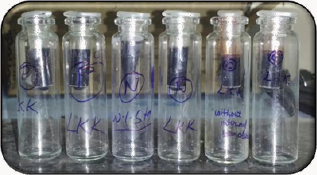
All three flasks were kept at their respective sites up to completion of the study from 16 February 2016 to 31 March 2016. Two vials of 1 ml each were prepared from each conical flask. Three vials with internal standard (90ul/1ml of blood sample) and three without internal standard. Blood was prepared for HS-GC. Three vials were subjected for qualitative study and another three for the quantitative analysis. After instrumentation graph was prepared and studied (Figure 1) (Table 1).
Table 1: Showing parameters of Gas Chromatography.
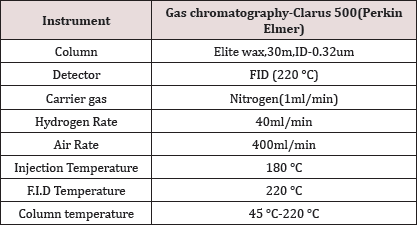
Figure 1: Showing preparation of samples..
Lupinepublishers-openaccess-Forensic-Genetics

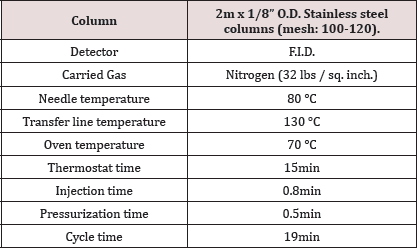
Headspace GC is used for the analysis of volatile and semi- volatile organics in solid, liquid and gas samples. The headspace method is especially suitable for the very fast separation of volatile components (alcohols, acetone, aldehydes) in complex biological matrices especially blood in mass-liquor and prohibition law related cases. This method has the advantage of avoiding the risk of contamination of non-volatile components, which may be eliminated due to on-line analysis by gas chromatography. The principle underlying the headspace analysis is that in a sealed vial at constant temperature, equilibrium is established between the volatile components of a liquid sample and the gas phase above it (the head space). After allowing the time for equilibrium a portion of the headspace may be withdrawn one by one from vials using a gas-tight syringe and injected to GC for on-line analysis (Table 2).
Table 2: Showing parameters of Head space.
Results and Discussion

Boold samples stored under insufficient conditions or for longer times have undergone putrefaction often contains certain amounts of volatile compounds. The increase of ethanol and higher alcohols in putrefying blood is often recognized, for which first and foremost bacteria's are reasonable. Therefore, ethanol is only a byproduct of bacterial decomposition processes. The reactions that take place are mainly
influenced by temperature, pH value, concentrations of available carbohydrates, and the presence of other utilizable nutrients.
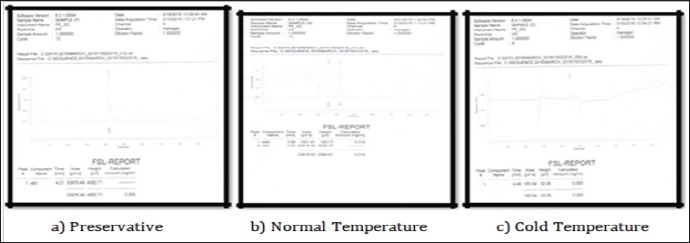
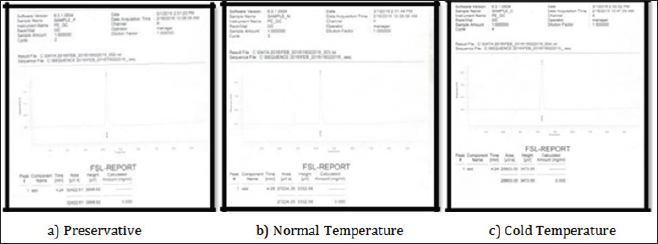
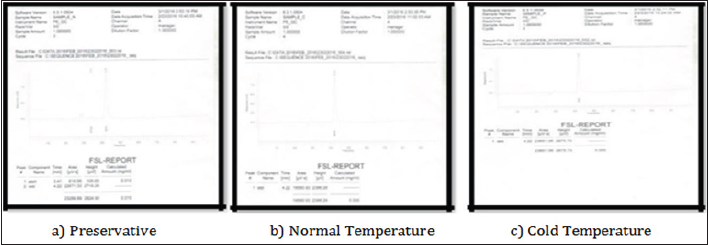
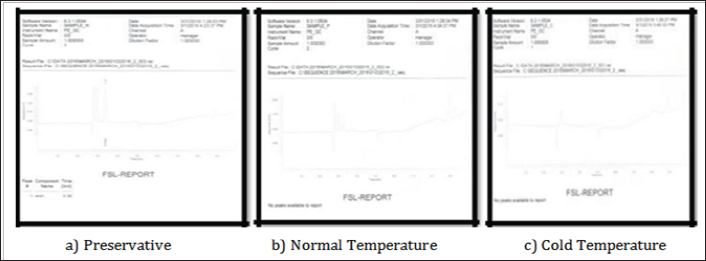
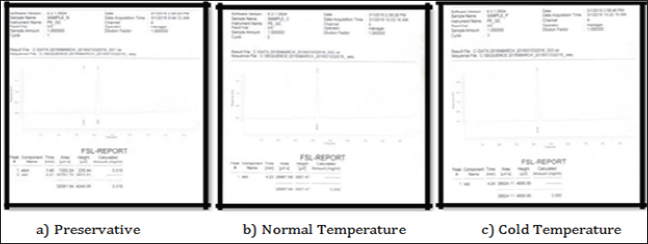
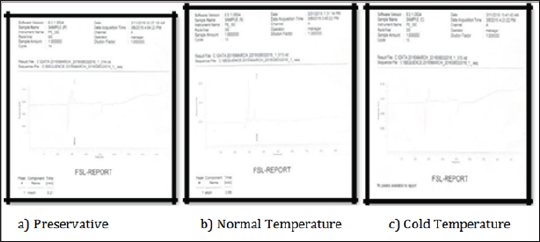
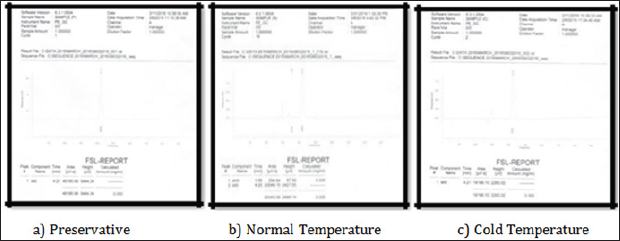
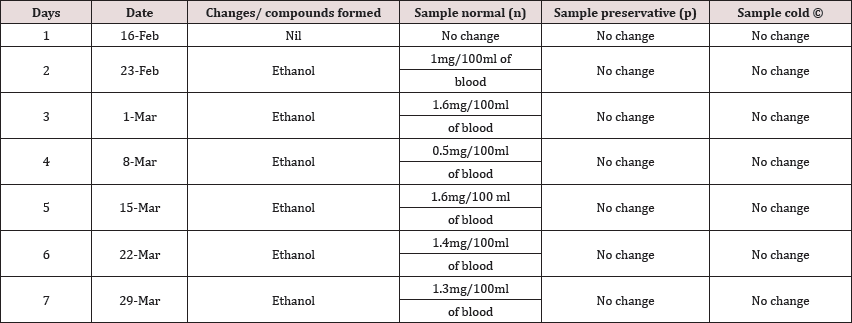
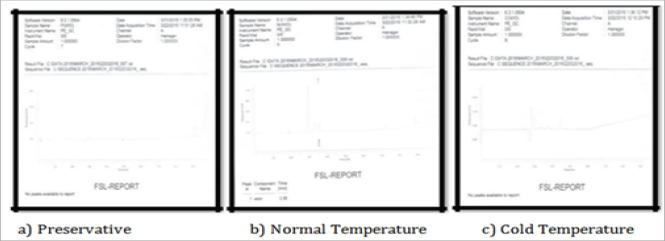
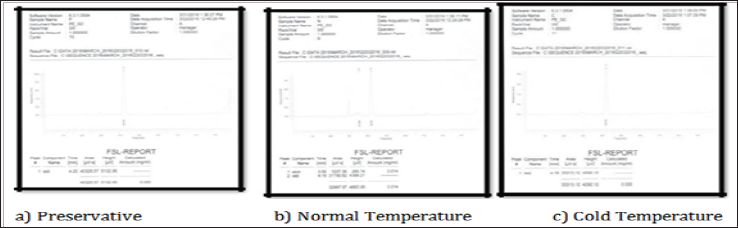
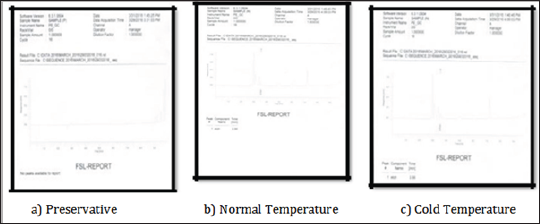
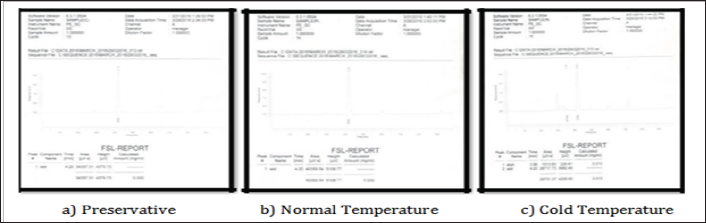
The main problems in the assessment of ethanol concentrations in blood from corpses include the potential of water loss, autolysis, putrefaction and postmortem glycogenolysis. A more precise differentiation of putrefactive alcohols has only been made possible by the introduction and development of gas chromatography. Comparing blood samples will recognize that the qualitative and quantitative; concentration of alcohols can be quite different. The possibility that neo genesis of ethanol after death might give rise to an incorrect estimation of BAC. In this study we examined the alcohol concentration qualitatively and quantitatively using head space-gas chromatography at the interval of successive seventh day from 16 Feb 2016 to 31 March 2016. The chromatogram of three different samples at different time periods is shown in following figures. Putrefaction of a blood sample was recognized by its odour and color. The predominating compound of alcohol formation in anaerobic putrefaction is ethanol. Additional formation of methanol, acetone and other alcohols occur only in trace amounts. But this study was only focused on the formation of Ethanol. The degradation of all alcohols however is assumed to commence within a few days. Peak values were measured after one week. It was found that the concentration of ethyl alcohol varies. After few weeks ethanol level decreases with increase in time of putrefactive blood and became almost constant. However no alcohol was detected at 4 °C. However, comparison of these graphs demonstrates that alcohol concentration often changes in putrefying blood. (Table 3) (Figure 2-12).
Figure 2: Showing quantitative chromatogram for the concentration of alcohol at day 1 in different samples.Day 1(16 Feb 2016)
Lupinepublishers-openaccess-Forensic-Genetics

Figure 3: Showing quantitative chromatogram for the concentration of alcohol at day 2 in different samples.Day 2(23 Feb 2016)
Lupinepublishers-openaccess-Forensic-Genetics

Figure 4: Showing qualitative chromatogram for the concentration of alcohol at day 3 in different samples.Day 3(1 March 2016)
Lupinepublishers-openaccess-Forensic-Genetics

Figure 5: Showing quantitative chromatogram for the concentration of alcohol at day 3 in different samples.
Lupinepublishers-openaccess-Forensic-Genetics

Figure 6: Showing qualitative chromatogram for the concentration of alcohol at day 4 in different samples.Day 4(8 March 2016)
Lupinepublishers-openaccess-Forensic-Genetics

Figure 7: Showing quantitative chromatogram for the concentration of alcohol at day 4 in different samples.Day 5(15 March 2016)
Lupinepublishers-openaccess-Forensic-Genetics
Table 3: Showing concentration of alcohol in different samples during different time periods.
Figure 8: Showing quantitative chromatogram for the concentration of alcohol at day 4 in different samples.Day 5(15 March 2016)
Lupinepublishers-openaccess-Forensic-Genetics

Figure 9: Showing qualitative chromatogram for the concentration of alcohol at day 6 in different samples.Day 6(22 March 2016)
Lupinepublishers-openaccess-Forensic-Genetics

Figure 10: Showing quantitative chromatogram for the concentration of alcohol at day 6 in different sampl
Lupinepublishers-openaccess-Forensic-Genetics

Figure 11: Showing qualitative chromatogram for the concentration of alcohol at day 7 in different samples.DAY 7 (29 MARCH 2016)
Lupinepublishers-openaccess-Forensic-Genetics

Figure 12: Showing quantitative chromatogram for the concentration of alcohol at day 7 in different samples.
Lupinepublishers-openaccess-Forensic-Genetics

Conclusion

The interpretation of postmortem alcohol levels is still problematic in forensic setting and in the field of legal medicine. Neo-formation of ethanol is due to microbial action either post-mortem in the body or from improper storage or preservation of the biological samples is a common problem in forensic toxicology. The same uncertainty applies to alcohol levels in blood samples that are improperly stored or are contaminated. In this project report neo formation of ethanol has been checked by using different temperature conditions and preservative. The alcohol concentration qualitatively and quantitatively using head space- gas chromatography at the interval of successive seventh day from 16 Feb 2016 to 31 March 2016. The chromatograms of three different samples at different time periods are shown in figures given above. At normal room temperature i.e. 20-28 °C without any preservative the decomposition of the blood starts and leads to formation of Ethyl alcohol. The concentration of ethyl alcohol varies as the days increases. It was found that the concentration of ethyl alcohol have varied pattern followed by a slight concentration decrease after 4th day. Thereafter, ethanol concentration remains more or less constant. However no alcohol was detected at 4 °C (Cold Temperature) and in the preserved blood. There is no real possibility for detail knowledge of post mortal changes of blood alcohol concentration in near future, so that it is necessary to comment alcohol aemia with special aspects on empirical practice.

Acknowledgement

I express my sincere and profound gratitude and deep regards to Prof Dr. RK Sharma, Chairperson, Department of Zoology Kurukshetra University Kurukshtra for allowing me to carry out the present study. I am highly obliged to Dr. RK Sarin, Director Forensic Science Laboratory, New Delhi-Rohini) for giving me the opportunity to undergo training course at their estimated institute. However, it would not have been possible without the kind support and help of many individuals and organizations. I would like to extend my sincere thanks to all of them. I am highly indebted to Mr. Loveleen Kumar Katyal for their guidance, ideas and constant supervision as well as for providing necessary information regarding the project and also for their support in completing the project. I would like to express my gratitude towards Dr. Jogender Tanwar (maternal uncle) and all member of Forensic Science Laboratory, New Delhi (Rohini) for their kind co-operation and encouragement which help me in completion of this project. My thanks and appreciations also go to my colleague my friend Ritu Malik in developing the project and people who have willingly helped me out with their abilities

For more Lupine Publishers please visit our website

For more Forensic and Genetic Sciences journals please click here

To know more about open access publishers please click on Lupine Publishers
Follow on Linkedin : https://www.linkedin.com/company/lupinepublishers
Follow on Twitter   :  https://twitter.com/lupine_online

Friday, 27 September 2019

Degree of Injury on Visum et Repertum

Lupine publishers| Journal of forensic & genetic sciences

Abstract

Visum et Repertum is a written statement made by a doctor at the request of authorized investigators about the results of medical examinations of humans, whether alive or dead or part or parts of the human body are suspected, based on their knowledge and under oath, to the benefit of Justice.
Keywords: Visum et Repertum; Degree of injury; Forensic clinic; Health care
Abbreviations: ISS: Injury Severity Score; AIS: Abbreviated Injury Scale; NISS: New Injury Severity Score; TRISS: Trauma Related Injury Severity Score; ICISS: Injury Severity Score; SRR: Survival Risk Ratio; RTS: Revised Trauma Score; MTOS: Major Trauma Outcome Study

Introduction

One that must exist at the conclusion of Visum et Repertum survivors of abuse cases is the degree of injury. There are three types of degrees injury, which are minor, moderate, and severe. The degree of the injury is related to the type of criminal offenses committed by the offender and the severity of the maximum criminal penalty that can be imposed on the offender [1].

Discussion

There is no clear explanation of the degree of injury as described above leads to conclusions made by individual examining physicians may differ. Although in practice Indonesia has used a benchmark in determining the degree of injury, but the determination of the degree of injury in certain cases can occur dissent among doctors. Errors in the determination of the degree of injury can lead to injustice for victims and perpetrators of criminal acts. The inaccurate determination of the degree of injury will have an impact on the criminal provisions that will be applied to the case, which will subsequently affect the magnitude of the criminal threat to be imposed on the offender. Under the Penal Code it is stated that the perpetrators of light maltreatment are sentenced to imprisonment for 3 months, the perpetrator shall be sentenced to imprisonment for 2 years and 8 months, and the sentence can be increased up to 5 years if the victim is seriously injured [2-5].
In 1974, Baker have found the degree of injury to classify trauma victims based on the severity of the injury known as the Injury Severity Score (ISS), which is based on the value of the Abbreviated Injury Scale (AIS), which had the wound by scoring the severity of anatomy [6] parameter ISS scores highly correlate with the probability of survival of the traumatized patient. The ISS uses six different regions of the head and neck, face, chest, abdomen or pelvic contents, extremities, and external structures. ISS scoring with description are minor, moderate; severe, not life-threatening; severe, life-threatening; critical, survival uncertain; un survivable [7].
The weakness of ISS if there is severe multiple injury to one body region and the ISS gives equal weight to each body region, for example: AIS 3 score in the chest region will give a different prognosis when compared with AIS 3 score in the head region. Other examples: AIS 5 score in the chest region will provide a different prognosis when compared to the AIS score of 5 in the head region [7] In 1997, to improve the limitations of ISS was found New Injury Severity Score (NISS) which sums the quadrants of the three injuries that have the most AIS scores higher regardless of whether it comes from a different region [8].
The difference between the ISS is that NISS sees only the degree of severity of the injury to account for the different multiple surfaces in one region of the body. In addition, there are scores of injury degrees based on a combination of physiological and anatomical parameters which have two well-known first Trauma Related Injury Severity Score (TRISS) and International Classification of Disease, 9th revision, Injury Severity Score (ICISS) [5].
An injury severity assessment method is important to predict the outcome of an injury. Differences in criteria used for assessment of injury are necessary because they are associated with possible mortality, cost, reliability, quality of life, and disability. Methods used include ICISS (ICD-based Injury Severity Score) which involves the value of Survival Risk Ratio (SRR) which calculates the life expectancy ratio for individual (ratio of the number of patients with surviving injury code compared to the total number of patients who has been diagnosed with the code). The ICISS score comes from ICD-10-AM which contains code due to injuries suffered [9] ICSS is also combined with the age and score of Revised Trauma Score (RTS) in an analytical approach is similar to Trauma Related Injury Severity Score (TRISS) analysis. This method has a superior and better prediction compared to TRISS.10 The ICISS scoring method was introduced by Rutledge et al and claimed to provide a better prediction of trauma outcome than the TRISS scoring method with the application of the neural network information system. Limitations of ICISS methods are:
    a) Recording of deaths occurring only in hospitals.
    b) Limitations in identifying patients.
    c) Affected by SRR value.
    d) Excluded from the diagnosis of injury (co morbid factor).
    e) Some studies have found that ICISS values have the same values as SRR when compared to the SRR value ratio to obtain ICISS values.
Assessment of SRR or ICISS utilizes physiological factors and aims to detect predictions of trauma outcomes, so it is more appropriate to use for moderate to severe injuries. The method and the like are not beneficial for minor injuries. TRISS method known around 1981, this method using database from Major Trauma Outcome Study (MTOS). TRISS has a deficiency in describing injuries that occur until the problem does not consider aspects of the medical condition / patient disease that already existed [10,11]. Research in Indonesia on the method of determining the degree of minor injuries and injuries was done with the scoring method TRISS and total wound.

Conclusion

Determination of injury degree at the conclusion of current Visum et Repertum is still determined based on the scholarship and experience of the examining physician. Advanced research is needed to assist physicians in determining the degree of injury that can distinguish the degree of minor, moderate and severe injuries seen from anatomical and physiological aspects.

For more Lupine Publishers please visit our website

For more Forensic and Genetic Sciences journals please click here

To know more about open access publishers please click on Lupine Publishers
Follow on Linkedin : https://www.linkedin.com/company/lupinepublishers
Follow on Twitter   :  https://twitter.com/lupine_online

Friday, 5 July 2019

LupinePublishers Peer Reviewed Journal of Forensic & Genetic Sciences

A Critical Exploration of Ethical Decision Making through Disability and Ethnicity-Case study by Arpita Ghosal in Peer Reviewed Journal of Forensic & Genetic Sciences in LupinePublishers.

This essay will focus on the ethical judgements required when working with a client with disability and different ethnicity in counselling and how these may differ from able bodied clients. It includes a case study through which I demonstrate my ethical understanding and values while working with these sensitive issues. Hence, I will consider the broader aspects of these 2 areas through a client. Seeing the client with a disability and diverse ethnicity as a person with numerous personalities, roles, capacities, and environments encourages the counselling process. Therefore, with the knowledge of these issues counsellors turn out to be more sensitive to the necessities of various populations and provide more viable treatment not facilitated by a rigid, practice-based method.Ethical decision making is the functional process through which therapists base their activities, utilise a framework of client rights and professional obligations for decision making. It additionally includes gathering evidence and facts from research, figuring out if an issue or difficulty really exists, consultation with colleagues or peers or with supervisors to decide how best to apply proficient ethical codes, standards and values in practice. However, the perplexity brought about by limits as a continuum, ranging from withdrawal (rigidity, inflexible limits/guidelines) to enmeshment (adaptability to the point of diffusement), with a large grey area in the middle, of that is notoriously vague and dependent upon the therapist, the circumstance and the client’s changing needs and conditions. This article will critically explore the decisionmaking process while working with a disabled client with different ethnicity. Preez 2013 [1] contends that practice-based ethical decision-making models mostly don’t convert into ethical decisions, yet rather work as a device to assess or look at a circumstance. Corey, Corey and Callanan [2] raised comparable worries that these codes of practice can’t be connected in a generalized or automated way, as specialists frequently get themselves confronted with a social context, complexity of personal values of individual qualities, and additionally a prescriptive professional code. 

For more Lupine Publishers Open Access Journals please visit our website

Wednesday, 27 March 2019

Genetics Sciences and Forensics-Lupine Publishers-The Compromised, Pre-Diseased or Post-Diseased Terrain, Malaria and Germ Terrain Dualism: (PRJFGS)


The Germ-Terrain duality theory of disease states that the aetiology of certain diseases/diseased states is better explained as a complex interplay between germs and the inherent anatomical/ physiological integrity of the body cells. It argues that the aetiology of certain diseases is not fully explained merely by the presence of germs (Germ Theory) or by a mere loss of cellular integrity (Terrain Theory). As a result, the prevention and treatment of such diseases should focus not just on fighting germs but on maintaining/ restoring the anatomical/physiological cellular integrity.

For more Lupine Publishers Open Access Journals please visit our website
For more Lupine Publishers Journals articles please click here


Thursday, 24 January 2019

Peer Reviewed Journal of Forensic-Lupine Publishers- Tackling a Tough Question: Who is the Emerging Psychopath?: (PRJFGS)


Defining who the nascent or emerging psychopath is tied to an unfortunate reality. There is no uniformly accepted definition of the concept, which is tied to debate in the literature. As some have argued, and rightfully so, the most common measures for psychopathy are operating in a theoretical vacuum and the measures have been confused with the construct [1,2]. This is the opposite of how this should work, as the construct should inform the measure. Little ground in conceptually defining psychopathy will be made as long as clinicians and researchers continue to move forward as though this issue has been resolved.

For more Lupine Publishers Open Access Journals please visit our website
For more journal of forensic sciences & genetics articles please click here


Tuesday, 8 January 2019

Victims of the Civil War and the Franco Repression in Asturias: A Provisional Balance: (PRJFGS) - Lupine Publishers


Counting and naming the dead of armed conflicts, massacres and any historical traumatic event is not yet an easy task; even less if they mediated long decades with a dictatorship of almost forty years in between. More difficulties involve the localization in space of a large part of the fatalities resulting from irregular repression (“walks”), as well as that of hundreds of soldiers fallen on the front and so often poorly buried in improvised trenches or trenches. Counting, naming and, as far as possible, locating the burial sites were the basic objectives of the research project that since 2003 we have been carrying out at the University of Oviedo under the direction of who signs these pages. The initial impulse came from the petitions that descendants of the losers and associations committed to the signification of the victims of Franco’s repression made to the Government of the Principality.

For more Lupine Publishers Open Access Journals please visit our website
For more Genetics Sciences articles please click here


Monday, 10 December 2018

Thursday, 29 November 2018

Genetic Counseling and Testing for Colorectal Cancer in Young Adults: Mini-Review: (PRJFGS) - Lupine Publishers


Colorectal cancer (CRC) has one of the largest proportions of familial cases. Two to 5% of all colon cancers arise in the setting of inherited syndromes, including Lynch syndrome (hereditary nonpolyposis colorectal cancer [HNPCC]), familial adenomatous polyposis (FAP), attenuated FAP, MUTYH-associated polyposis (MAP), and certain hamartomatous polyposis conditions like Peutz-Jeghers syndrome (PJS) and juvenile polyposis syndrome (JPS). All of these conditions are inherited, autosomal dominant disorders, except MAP, which is autosomal recessive [l]. Although clinical similarities do exist, each has different cancer risks, characteristic clinical features, and separate genetical etiologies. In addition to these syndromes, up to 30 % of colon cancers exhibit increased familial risk, likely related to inheritance. A number of less penetrant, but possibly more frequent susceptibility genes have been identified for this level of inheritance. 

For more Lupine Publishers Open Access Journals please visit our website

For more Genetics Journal articles please click here


Monday, 19 November 2018

The Case of the Fraudulent “Free Gift”- Amazon.Com and Luminary Skin Care: (PRJFGS)- Lupinne Publishers


The Case of the Fraudulent “Free Gift”- Amazon.Com and Luminary Skin Care by Cam Caldwell in Peer Reviewed Journal of Forensic & Genetic Sciences (PRJFGS) in Lupine Publishers


One of the realities of human psychology is that people want "something for nothing” [1]. Franklin P. Jones, the long-time humorist whose column in the Saturday Evening Post was its longest continually posted feature, once wisely observed, "If you get something for nothing, you just haven't been billed yet [2]. "Jones was only partially right in today's credit card age when some fraudulent advertisers access your credit card balance without even the courtesy of a bill before the fact! Unfortunately, one of the more disappointing realities of business life is that the name of the highly regarded Amazon.com corporation-one of America's most highly respected companies [3] has been used to perpetuate a fraud by Luminary Skin Care, yet Amazon.com is allowing this fraud to go on unchecked.


Flaky Academic Journals: Lupine Publishers "craves to select scientific con...

Flaky Academic Journals: Lupine Publishers "craves to select scientific con... : Lupine Publishers describes itself (on its website, 2/...